When we think of creativity, we often think of artists, musicians, or writers. But what about someone whose job is to restore and preserve artifacts from the past? For Portuguese heritage specialist Pedro Pedroso, creativity is not optional; it’s essential.
What is conservation?
When asked to define his field, Pedro says his work is about preserving the past for the future. “Cultural conservation sits at the intersection of art and sciences along with material engineering and innovation,” he explains. “But mostly, it relies on human expertise and interaction. When restoring an artifact, the goal is not simply to repair it. The goal is to preserve the information embedded in the material itself.”
That’s because objects don’t tell stories in words. Their history is physically written into their material — in pigments, in metal alloys, in wood fibers, in layers of paint. “You cannot manipulate that information,” he says. In that sense, conservation is less about interpreting the past through stories and aesthetics and more about safeguarding memory.
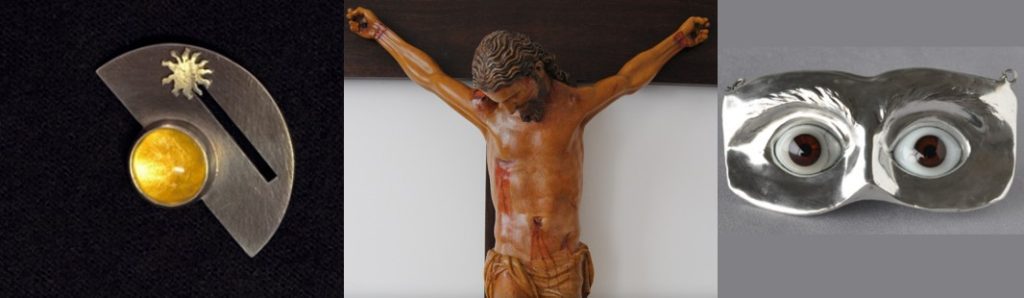
According to Pedro, a common misconception is that restoration follows fixed procedures. It doesn’t. Two paintings from the same century require completely different approaches. A wooden sculpture must be studied before it is touched. A metal artifact may demand chemical analysis before cleaning begins. The founder of Archeofactu, a company dedicated to restoring and conserving cultural heritage, Pedro works closely with universities, particularly science and technology departments, to conduct non-invasive examinations and analytical techniques, such as radiography, scanning electron microscopy, and X-ray.
But here lies the creative paradox: chemistry is a defined scientific discipline. In conservation, you’re not conducting an experiment; you’re preserving meaning. If something is lost in the process; it’s lost forever. “Heritage is not like the sun that rises every day, and replicas are just not the same,” he says.
Creativity as leadership
Pedro doesn’t work alone. Each project requires assembling a tailored team including wood specialists, metal experts, stone conservators and ceramic specialists. In addition, he works with carpenters and painters, engineers and architects, and physicists and chemists. The team changes depending on the material.
Working with such a diverse range of experts requires another kind of creativity, namely, creative leadership. Pedro sees himself not only as a conservator, but as a conductor. He’s the one who must hold the vision, understand the architect’s perspective, best utilize the expertise of specialists, and satisfy the client, while running projects that can last one or two years.
Working with such specialized experts, some with 40 years of experience, requires emotional intelligence. Creativity in this context is not artistic flair; it’s a relational skill. It’s about trust, because ultimately, that’s what wins projects. Reputation, Pedro says, comes not from advertising, but from relationships. In one major restoration of an 18th-century building, the client told him: “We accept your decisions, because you are speaking for the experts.”
Rediscovering lost beauty
One of his most striking projects involved an 18th-century building whose interior tower walls had been painted over in dull grey during the early 20th century. Beneath the layers lay vibrant scagliola — a decorative technique that imitates marble using rich reds, yellows, and oranges. When the team carefully revealed a full vertical section five stories high, the colors came back to life. The architects were stunned. The brilliance had been there all along. It simply needed to be brought back.
That restoration required scientific method, careful sequencing, collaboration, and artistic sensitivity. It was not merely technical work; it was a complete revival.
The constant encounters with the creativity of previous centuries, when craftsmanship was built to last, is one of the most powerful aspects of Pedro’s profession. Standing in front of such artifacts, one can’t help but ask: How did they create this with the tools of their time? Museums often leave us speechless for that reason. But Pedro doesn’t just observe these objects: he touches them, studies them, protects them. He sees creativity as timeless.
He also understands that cultural heritage is not neutral. It carries symbolic power, because it was mostly built on power and politics. New museums, restored palaces, public exhibitions all create civic pride and legitimacy. Politicians understand that restoring heritage strengthens identity. Bridges are called “works of art” in engineering for a reason.
But Pedro’s loyalty is not connected to politics or prestige. His main concern is preserving heritage. As a young man growing up under a military dictatorship, he remembers thinking that suppression is no way to run a country. His dream was to do something to change the country for the better. Since starting the company almost three decades ago, he has been helping to preserve Portugal’s legacy.
A teacher and lecturer, Pedro’s advice to young people entering the field is to listen to the experts. “Don’t assume you know everything, and don’t take anything for granted,” he advises. In conservation, as in life, humility is crucial. He likes to quote the 17th-century Jesuit missionary Padre António Vieira who once said: “We are what we do. If you do nothing, you are nothing.”
He also referenced an Arab saying: We are always building our house. “Our life is the process of building that house,” he said. “Memory is constructed, and cultural heritage is part of that construction. It’s part of our collective memory, including family, community and national memory.”
Some thinkers argue that what we inherit from the past is merely its garbage. If that is true, then the “garbage” of the past centuries was made of extraordinary materials. We should all be asking ourselves, what will survive our own era besides the piles of plastic and other harmful materials, and what does it say about us as a society?
In a world obsessed with consumption and speed, conservation asks a key question: what is worth preserving? As a person whose superpower is the ability to connect disciplines, bring people together and lead with vision, Pedro believes that creativity is not about inventing something new, but about ensuring that what was meaningful in the past continues to inspire the future.
Watch the video of the restoration of the Palácio Silva Amado in Lisbon, awarded with the National Urban Rehabilitation Award in the Residential Category.